We’re in the stormy time of the year here in the Midwest. We have to schedule our lawn mowing and flower planting for the days with breaks in the rain.
That roof is of the house directly across the street from mine. The clouds are called mammatus, a reference to their mammary shape. (Note that I increased the contrast in this photo.)
They are known to accompany bad weather, and these certainly did. We were in the house only hours later, watching the severe weather bulletins on the television, ready to dash down to the basement. But the worst of the storm passed north of us, and all we got was a lot of rain to help water in the $100 of bedding plants I had planted the day before and to encourage the grass of my lawn to grow so I have to mow it again.
One-Match Fire was recently featured at Shepherd.com. Here is the link.
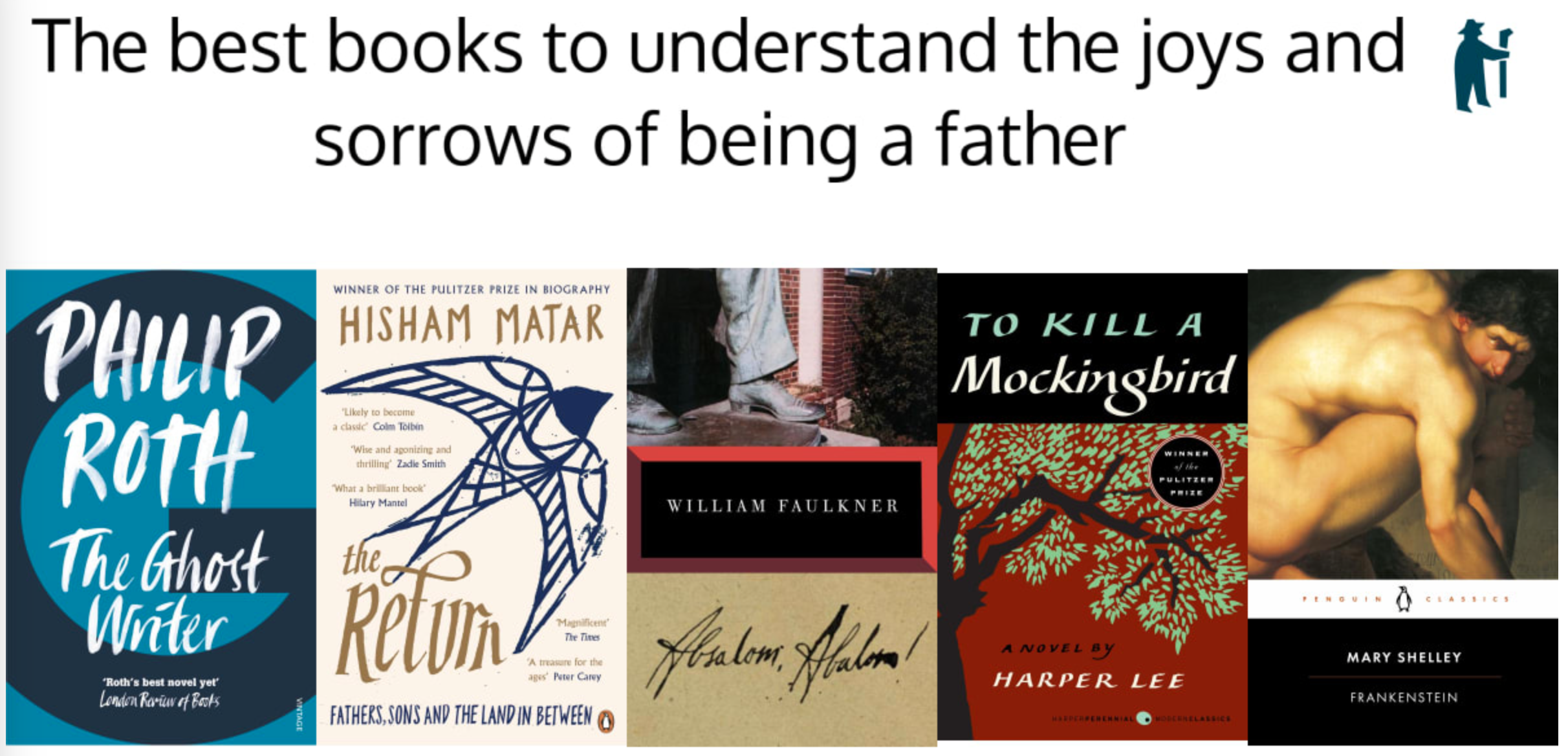
Shepherd.com is a book aggregator site with a twist. Authors are welcome to submit their book to be featured there, and they are asked to also include five books that are thematically connected to it. Since One-Match Fire is about the relationships between fathers and sons, my thematic connection was the best books to understand the joys and sorrows of fatherhood. The works I chose are an eclectic collection. You can see the choices in the image above.
If you go to the link you can read my thoughts about One-Match Fire and about each of the five novels I selected.
More than 10,000 authors have had their books featured on Shepherd.com. (You can too!) And each of those has supplied five thematically connected works. This means that you can browse the site by general subject to find books people have considered worthy. Or you can look for a given book and see where the connections lead you. (For example, OMF is linked to more than 1,200 book about coming of age as well as several other categories.) Give it a try. (Also, if you buy a novel through the link they provide, they may get a few nickels as an affiliate, which helps the site stay in operation.)
I was invited to a book group’s discussion of One-Match Fire last week. I had a great time.
We did this via Zoom since members of the group were from all over the country. While I was grateful that these people had an interest in my novel, I was even more pleased by the nature of the discussion. I’ve talked about One-Match Fire on more than a dozen podcasts and website interviews, and for the most part I get to say the same thing each time. This group, however, touched on some topics that hadn’t yet come up in those other venues.
Chief among these was a discussion of the novel Frankenstein and how it figures in my novel. This only gets one mention in One-Match Fire (and a quote from it is one of the epigraphs), but these readers noticed that and we had a good conversation about its importance to one of the characters. As far as I can recall, this has never come up in any of my other discussions, and while it doesn’t get specific mention in the sequel, Parent Imperfect, it is important to the Kelly character (and it features heavily in his novel that may come someday).
It was gratifying to have some readers key in on this reference. They also pursued the importance of the female/mother/wife characters in One-Match Fire. While it is a novel about the relationships between fathers and sons, the women characters are important at each step of the story’s development, and it was good to have that conversation. (The Kathy character is the center of a novel that I’m currently doing battle with, and it, too, may appear someday.)
I suppose I should give some thought to things they didn’t bring up. Some chapters, which I considered key to the plot and character development, received no mention at all. Does that mean I’m giving them more weight than they deserve? Or that they were poorly written? Or might some other group talk about them and not other things?
And then, a few days later, I received a package of quality teas from them in gratitude for my participation.
This is one of my occasional participations in David Abram’s Sunday Sentence project, sharing the best sentence I’ve read during the past week, “out of context and without commentary.”This is one of my occasional participations in David Abram’s Sunday Sentence project, sharing the best sentence I’ve read during the past week, “out of context and without commentary.”
Human arrangements are nothing but loose ends and hazy reckoning, whatever art may otherwise pretend in order to console us.
My conversation begins at about the fifteen minute mark.
It took us three tries to make this happen. We had scheduled the interview for one day last week, but technical problems nixed that. Then we tried earlier this week, and about halfway through our conversation, the phone connection just dropped. So we tried a third time and succeeded.
Tom Riddell had already written a loving review of One-Match Fire.
A story I wrote very recently, “Late News,” has already found a home in an upcoming anthology by Wising Up Press. The anthology will be titled Out of Line, and its general theme is stories of “Halfs, Steps, In-Laws, & Belonging.”
This story is (yet another) part of the universe I seem to be creating for the characters in One-Match Fire, Parent Imperfect, and a few stray short stories. It involves the Curt and Kelly characters, well into their futures when they are both retired. They receive a bit of news that affects one of them so fundamentally he doesn’t know how to react.
This story takes place in approximately in 2056, and I realize I am tempting fate to imagine we’ll all still be around then. But the two characters are old men in the story, so I had to jump ahead a little.
I don’t know when the anthology will be out, but they’ve published several dozen. It will be in print format only, so you won’t be able to read it online. But if I keep writing stories about these characters, maybe I can collect them into a book of their own someday.
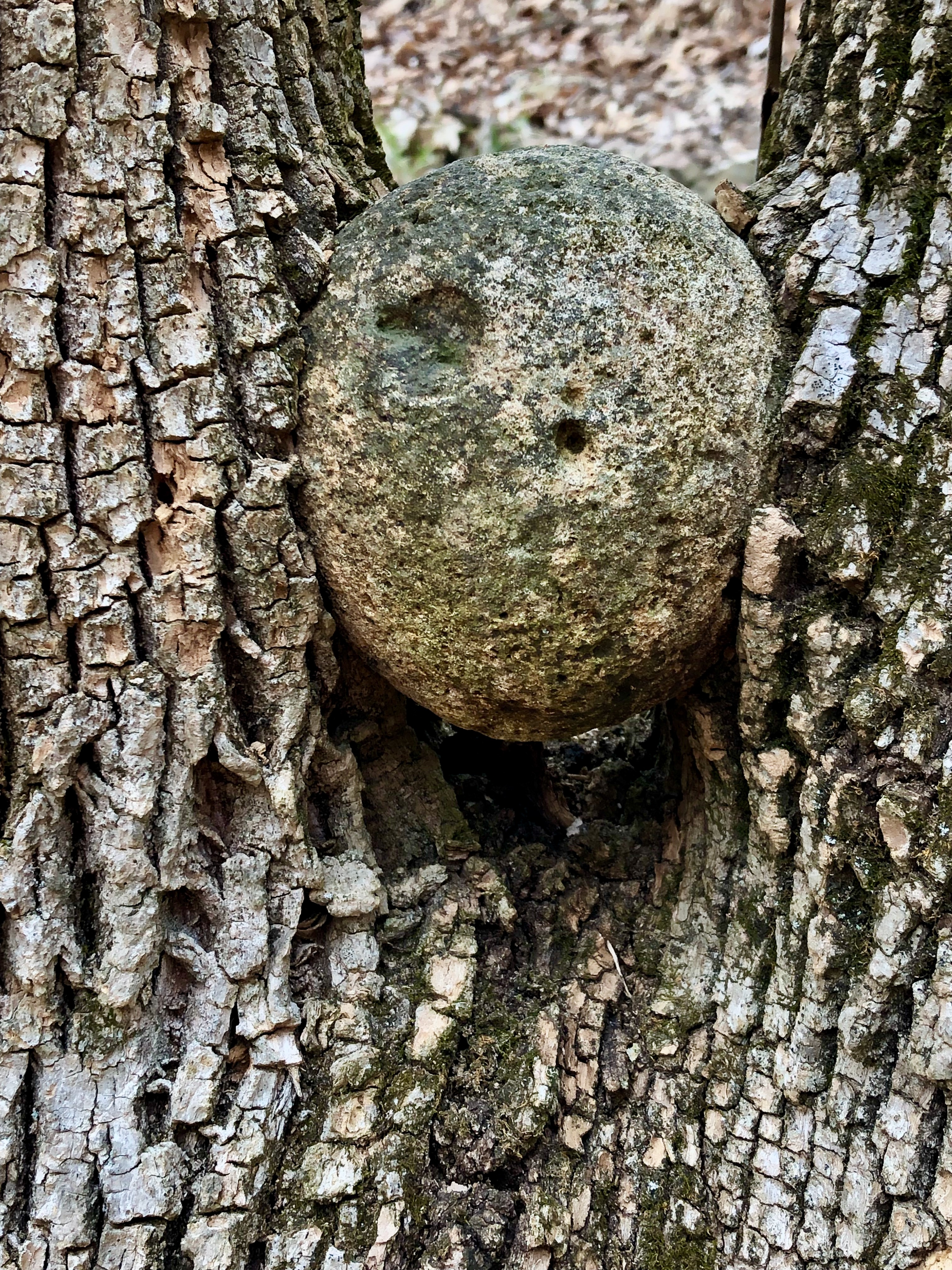
What you see above is a round rock that I wedged into the fork of a tree trunk many years ago in the forest at my little cabin on the edge of the Missouri Ozarks. You see the tree is growing around the rock. This is called inosculation. I check on this rock whenever my feet take me to that part of my forest (which isn’t often). What’s curious about this is that there is a second round rock that I had wedged into that fork below this rock even earlier. It has been completely absorbed by the tree. One day someone with a chainsaw is going to be using colorful language when they come across that.
__________
I checked my outstanding submissions at Duotrope this morning. I currently have 26 stories on submission at various litmags and publishers. (A better way to phrase that is that I have 26 submissions of stories. Some stories are out to several litmags.) That includes a couple of novels, but mostly they’re short stories. The oldest has been out since last August with a publication that I’ve been trying to get into for a long time. I’d sent them two other stories before and they’d rejected them in one day and two days. The fact that this story has been there so long suggests either they are seriously considering it or they’ve lost my submission. I’ve written the polite follow-up email asking its status, but I haven’t had a response yet. (I’m probably going to have to withdraw it because . . . )
__________
I withdrew two of my outstanding submissions this morning because they are chapters from Parent Imperfect. When I had submitted them last fall, the novel was not a sure thing, and though it was likely, the novel’s publication date would be “far” in the future. Well, I’m creeping up on publication date (June), so those stories will soon be “previously published,” as they say in the industry. Many/most litmags don’t want to run things that have been published before. Also, it’s grown too late to add any last-minute publication acknowledgements to the verso title page of the novel if the stories are accepted. So to avoid a mess, I’ve withdrawn them.
The problem lies with the one story that’s been out there since last August. That, too, is a chapter from Parent Imperfect. And I should withdraw it for the same reason. I wrote to the litmag to alert them to this status to see if it’s a problem for them, but I haven’t heard a response.
__________
I’m beginning to think that I should no longer submit chapters from novels I’m working on as short stories. Aside from the potential confusion of a previously published status, I wonder if maybe it dilutes my effort.
Ten of the chapters of One-Match Fire and three from Parent Imperfect were published this way. In both cases I did this before I understood that they were parts of a larger novel; they were simply short stories I had written. And I thought that they helped “market” the eventual novel by their earlier presence in print. (Several of the publications printed notices of One-Match Fire when I told them of the evolution.)
Now I’m thinking there might be some creative integrity I should maintain by treating the novel as a whole of its own without parting it out. What do you think?
__________
WordPress keeps trying to change “litmags” to “litmus.” Not sure how many times I have to correct the automatic change before the blog dictionary accepts it.
__________
I’ve found that part of my self editing involves a lot of “cut and paste” work with clauses. I guess I write convoluted sentences in the heat of composition and then need to muscle them into coherence later. As a result of this moving around, I often have missing words or extra words in the modified sentence. Normally I spot those, but I think sometimes my familiarity with the text lets my eye pass over them without seeing them.
I think I’ve written here before that I consider the Editor function in Word to be mostly silly as it attempts to enforce grammar conventions (which I don’t consider required for creative writers) and gets them wrong sometimes (because the AI isn’t smart enuf yet). Yet I have found that it will often catch the missing and extra words that are the result of my rearranging edits.
When I submit a story now, I put a statement in my email saying that it was not created through the use of AI (which many publications are specifying they prohibit), but is my use of the AI Editor in Word different?
__________
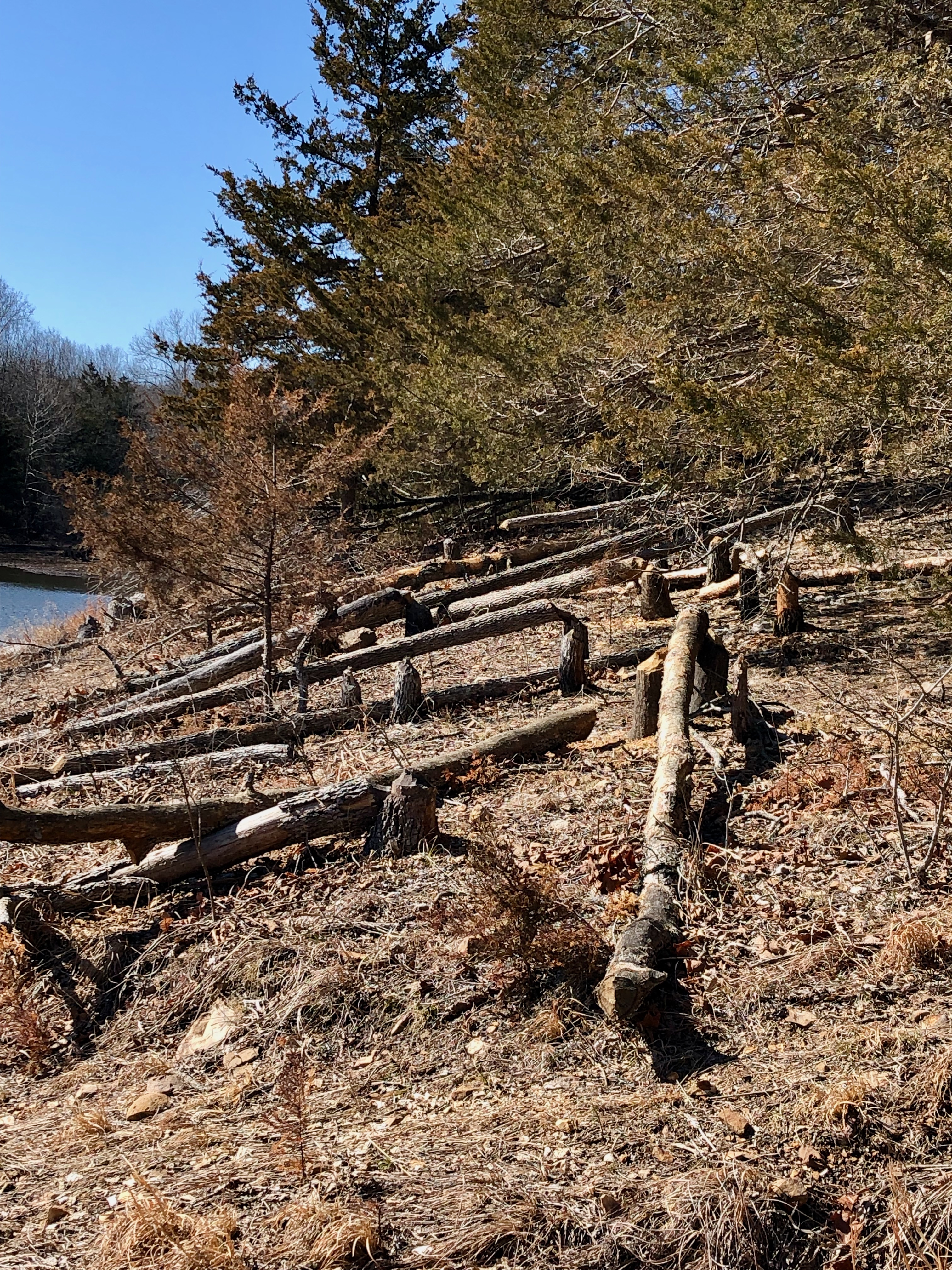
The beavers at my cabin seem to be thriving. They continue to take down trees along the lakeshore (and several hundred feet into the forest). Once down, the trees are stripped of their branches, which disappear (presumably into the dens for dinner) and sometimes the bark is removed from the trunks. I understand beavers will eat the layer of wood under the bark. They have good taste. They only take the white oaks. What’s really interesting (to me, anyway) is that I will go to my cabin after a couple of weeks away and find a gnawed stump where once stood a tree. And it will be from a tree three or four inches in diameter. And the tree is gone! Not only do they take down these trees, but they somehow remove the trunk too. Most of the time the fallen tree is near the gnawed base, but sometimes it is carried off. That seems like a big job for a beaver. Marvels and wonders!
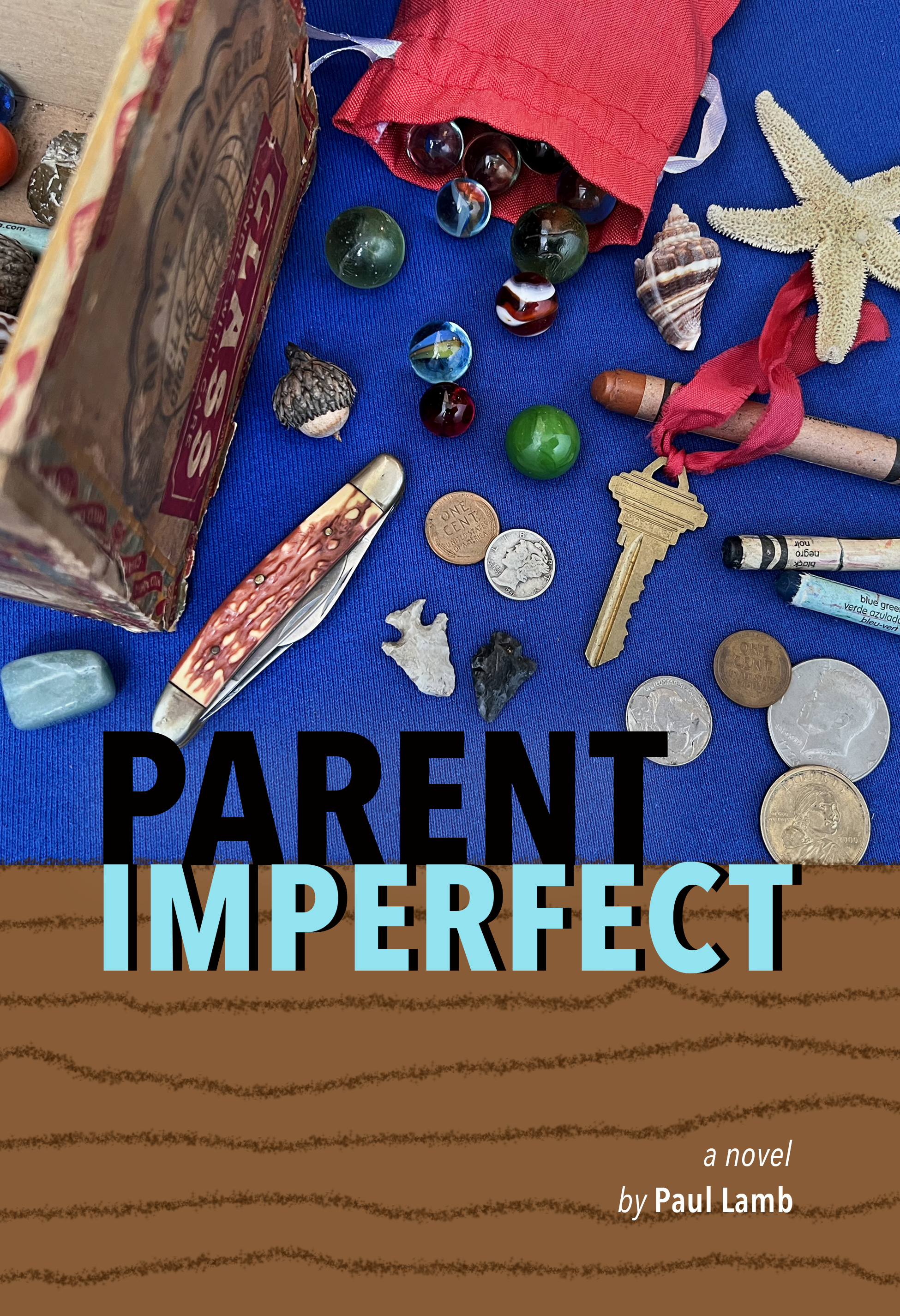
Lori at Lori’s Book Loft has written an appreciative, early review of Parent Imperfect, touching on many aspects of the novel, including the cover. (Note that the cover above may not be final. We’re still polishing it.) She had also reviewed One-Match Fire a little over a year ago.
The post she refers to on this humble blog is one I wrote recently about how I acquired two of the coins that appear on the cover. That post is here. The two arrowheads have a story as well (though it’s not as interesting; I bought them rather than found them).
I’ve been hustling in the last few weeks trying to get profile for Parent Imperfect, but I’ve still found some time to do some new writing.
Parent Imperfect will come out in June of 2024 from Blue Cedar Press.
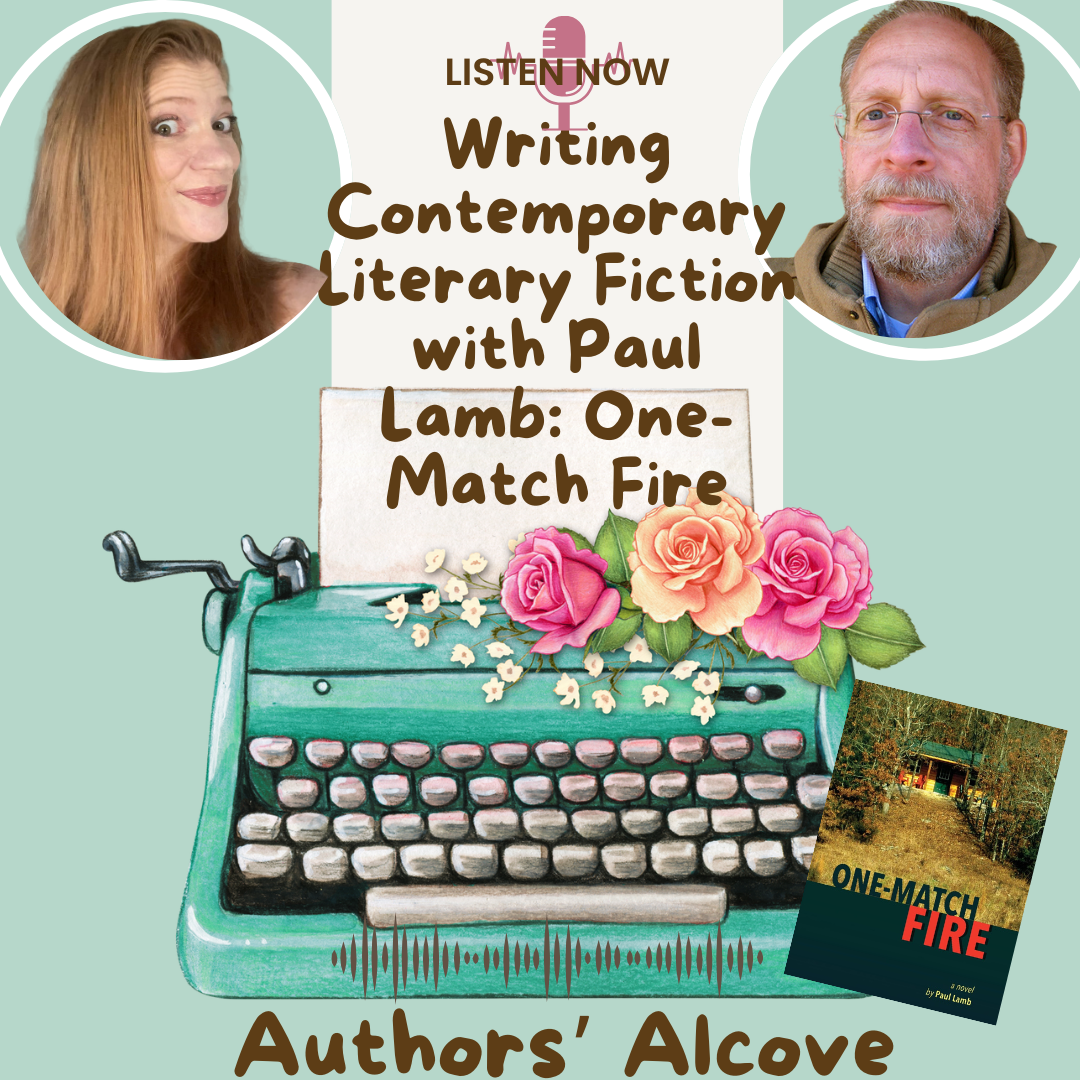
My conversation with Agnes Wolfe at the Authors’ Alcove podcast went live yesterday. You can listen to it here.
We talk about One-Match Fire and about my writing in general. (I get a little strident at the end about the so-called “rules of grammar,” but I always do. I think she did some judicious editing to keep me from sounding like a complete curmudgeon.) We’d recorded this back in 2023, so much of what I say about “the sequel” to my first novel will sound a little dated (but in a good way).
Agnes Wolfe has focused many of her episodes on helping beginning writers learn their craft and navigate the troubled waters of getting published.
This is one of my occasional participations in David Abram’s Sunday Sentence project, sharing the best sentence I’ve read during the past week, “out of context and without commentary.”This is one of my occasional participations in David Abram’s Sunday Sentence project, sharing the best sentence I’ve read during the past week, “out of context and without commentary.”
We are such inward secret creatures, that inwardness is the most amazing thing about us, even more amazing than our reason.


 Lucky Rabbit's Foot